


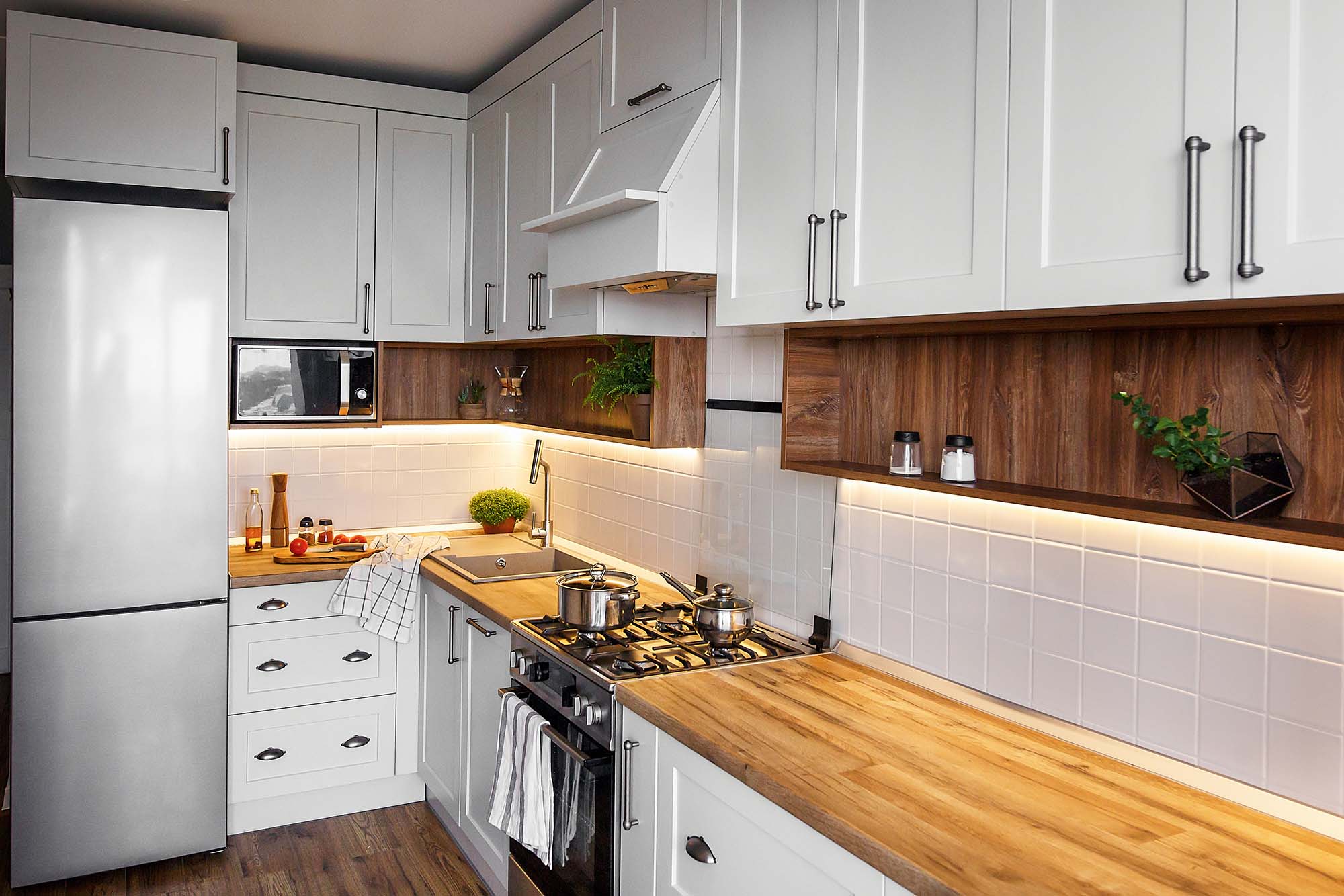
Open shelving has had a long moment in kitchen design, and it is easy to see why. It opens up a wall, shows off nice dishware, and makes a kitchen feel less boxed in than a wall of closed cabinet doors. What gets left out of most of the coverage is what these shelves are actually like to live with three, five, or ten years in, once the styling shoot is long over and the shelves are doing real daily duty.
The Dust and Grease Problem Nobody Photographs
Every open shelf in a kitchen sits exposed to the same air that carries cooking grease, dust, and general kitchen residue, and that residue settles on everything sitting out in the open. A glass cabinet front keeps dishes essentially sealed off from that exposure, while an open shelf means every plate, bowl, and glass needs a rinse before use even if it looks clean, simply because grease film is not always visible until it is on your hands.
This matters more the closer the shelving sits to a stove or range, where grease particles travel further than most people expect during regular cooking. A shelf on the far side of a kitchen away from the cooktop will collect far less residue than one positioned right above or beside where the actual cooking happens, which is worth factoring into where open shelving gets placed in a layout rather than choosing purely on visual balance.
What Actually Belongs on Open Shelves Versus What Doesn't
The kitchens where open shelving works well long term tend to be selective about what lives on the shelf rather than trying to store everything there. Items used daily, like everyday glasses or bowls in regular rotation, naturally stay clean because they get handled and washed constantly, while items stored for occasional use are the ones that accumulate dust and need periodic wiping down whether they get used or not.
This is really a storage strategy decision more than a style decision. A shelf styled with cookbooks, a few pieces of pottery, and glassware in daily rotation ages well because everything on it either gets touched often or was chosen to look intentional even with a light layer of use. A shelf loaded with delicate china that only comes out twice a year usually becomes the one spot in the kitchen that quietly needs the most upkeep.
Where Closed Cabinets Still Win for Certain Storage
Certain kitchen items genuinely benefit from being behind a closed door regardless of how appealing open shelving looks elsewhere in the room. Small appliances, mismatched storage containers, and anything that does not photograph well but gets used constantly are usually better hidden behind cabinet doors, since open shelving only stays visually calm when what sits on it is curated rather than functional overflow.
A kitchen that mixes both approaches, keeping a section of upper cabinets for practical daily storage while reserving one or two open shelves for display, tends to age better than a kitchen that commits fully to one approach or the other. That mix gives the room visual interest without demanding that every single item stored in the kitchen also be attractive enough to leave in view.
Adjusting an Existing Kitchen Without a Full Remodel
Homeowners who already have upper cabinets but want the open shelving look do not necessarily need to remove cabinetry to get some of that effect. Removing the doors from one or two upper cabinets and finishing the interior nicely can create a similar visual break without committing the whole kitchen to open storage, and it is easy to reverse later if the look does not hold up the way it was expected to.
This kind of partial change is also a lower risk way to test whether open shelving actually fits how a specific household lives before investing in a larger cabinet reconfiguration built around it from the start.
Getting Layout Advice From Top Notch Cabinets and More
Top Notch Cabinets and More works with homeowners across Fredericksburg, Kerrville, Comfort, Johnson City, and Llano, TX who are weighing open shelving against traditional upper cabinets, and that conversation usually comes down to how the specific kitchen gets used day to day rather than a universal right answer. Both approaches can work well in the right kitchen, and the goal is finding the mix that fits your household rather than following a trend that may not hold up the same way in your space.
If you are planning a kitchen layout and want honest guidance on where open shelving makes sense and where closed storage will serve you better, contact us to talk through your options. Visit Fredericksburg, TX to see cabinet and shelving configurations in person before deciding what fits your kitchen.